
A good jingle does something no logo can: it gets into people's heads and stays there. Years after an ad stops running, people can still sing the phone number, the slogan or the five notes that go with a brand name. For a small business, that kind of memory used to cost thousands of dollars and a studio session. Today you can write, produce and release a jingle in an afternoon.
This guide walks you through how to make a jingle for your business, from the one idea it needs to carry to the lyrics, the melody, the length for radio, TV and social video, the production (with AI or with a musician), and the rights you need before you use it in an ad.
How to make a jingle, in short
- Pick one message: the brand name plus one benefit or slogan. Nothing else.
- Write a short hook of 4–8 words that contains the brand name, with simple rhymes and a strong rhythm.
- Choose a feel that fits the brand: upbeat pop for a café, warm acoustic for a bakery, confident electronic for tech.
- Write a melody of a few notes that's easy to sing back after one listen.
- Produce it with a musician or an AI song generator such as SongUp AI.
- Cut versions: a 3–5 second sonic logo, plus 15, 30 and 60 second edits.
- Check the rights: you need a license that covers commercial and ad use.
What makes a jingle work
Most memorable jingles share four traits:
- The brand name is in it, usually more than once, and usually at the end, where it lands hardest.
- It's short. The memorable part is often only a handful of notes and words, even inside a 30-second ad.
- It's easy to sing. A small range, a simple rhythm, and repetition. If a child can't sing it back, it's too complicated.
- It matches the brand. A law firm and a toy shop shouldn't sound the same. The style tells people how to feel about you before they hear a word.
A jingle isn't a song about your business. It's a musical hook built around your name. Keep that in mind at every step, and resist the urge to list every service you offer.
Jingle, sonic logo or background music?
There are three common kinds of brand audio. Most businesses end up with a combination.
| Type | Length | What it is | Where it's used |
|---|---|---|---|
| Sonic logo (audio mnemonic) | 1–5 seconds | A few notes, sometimes sung with the name | End of every ad and video, app sounds, hold message |
| Jingle | 15–60 seconds | A sung tune with the brand name and slogan | Radio, TV, social video, events |
| Background music (music bed) | Any length | Instrumental music under a voice-over | Explainer videos, podcasts, store playlists |
If your budget or time is limited, start with a sung tagline of a few seconds that also works as a sonic logo, and an instrumental bed in the same style. Together they cover almost every use.
Step 1: Decide the one message
Write down the single thing a listener should remember. It almost always has two parts:
- Who you are: the brand name, said the way you want people to say it.
- Why you: one benefit, one promise or one call to action. "Fresh every morning." "Open till midnight." "Call 555-0142."
Cross out everything else. If you can't decide between two messages, make two jingles and test them later.
Also note the practical details: how to pronounce the brand name, your slogan if you already have one, and any words you must avoid for legal or brand reasons.
Step 2: Write the lyrics
Jingle lyrics are closer to a slogan than to song lyrics. Some rules that work:
- Put the name where the music lands, usually the last word of the phrase, on a strong beat.
- Use short, everyday words. One or two syllables are easiest to sing and remember.
- Rhyme simply. "Bright / night", "fresh / best": near rhymes are fine.
- Repeat. Say the name at least twice in a 30-second jingle, and end on it.
- Fit the rhythm. Clap the line as you say it. If it stumbles, change the words, not the rhythm.
A useful structure for a 30-second jingle:
- Opening line (problem or mood): "When the morning's slow and the coffee's cold…"
- Middle line (benefit): "…there's a warm cup waiting, fresh and bold."
- Hook with name (repeat twice): "Sunny Side Café, start your day the Sunny way!"
The free Rhyme Finder helps when you're stuck on a line, and the AI Lyrics Generator can draft a few options from your brand name and message. Treat AI drafts as raw material: keep the lines that sound like you, and rewrite the rest.
Step 3: Choose the style and tempo
The style is your brand's voice in music. Start from the feeling you want people to have:
| Brand feeling | Style that fits | Tempo |
|---|---|---|
| Fun, friendly, family | Upbeat pop, ukulele, whistling, hand claps | 110–130 BPM |
| Warm, local, handmade | Acoustic guitar, folk, piano | 80–110 BPM |
| Confident, modern, tech | Electronic, synth pop, clean beats | 100–125 BPM |
| Premium, calm, trusted | Soft piano, strings, jazz | 70–95 BPM |
| Energetic, sporty | Rock, EDM, big drums | 120–140 BPM |
Listen to ads in your industry, then make a list of what you want to avoid sounding like as well as what you like. Standing out from the competitor down the road is part of the job.
Never copy a famous jingle or song, even loosely. Melodies and recordings are protected, and "something like that famous ad" can be enough to get a business into trouble.
Step 4: Write a melody people can sing back
You don't need to read music for this. Sing the hook line out loud, many times, in different ways. Record each attempt on your phone or with the free Voice Recorder. Keep the one you can't stop humming.
What makes a jingle melody singable:
- A small range: stay within about five or six notes.
- Steps, not leaps: most notes move to a neighbouring note.
- A clear rhythm: the melody follows the natural rhythm of the words.
- A strong ending: finish on the "home" note of the key so it sounds complete.
If you play an instrument, find your melody on the Virtual Piano and try simple chords under it with the Chord Progression Generator. The classic four-chord pop progression works for most upbeat jingles.
Step 5: Produce the jingle
You have three main options.
Hire a musician or jingle studio
The traditional way: you send a brief, they write and record. You get experience and a human touch. Costs vary widely, from a few hundred dollars for a freelancer to many thousands for an agency, and it takes days to weeks. Always agree in writing who owns the music and where you can use it.
Make it yourself in a DAW
If you produce music, record the vocals over a simple arrangement in GarageBand, FL Studio, Ableton or any DAW. Keep the arrangement light, so the vocal and the brand name sit clearly on top.
Make it with AI
An AI song generator can turn your lyrics and style into a finished, sung jingle in minutes. On SongUp AI:
- Write your hook and lines in the lyrics field, with the brand name exactly as it should be sung.
- Describe the style and mood, for example "upbeat acoustic pop, ukulele and hand claps, friendly female vocal, 120 BPM".
- Generate a few versions and pick the one where the name sounds clearest.
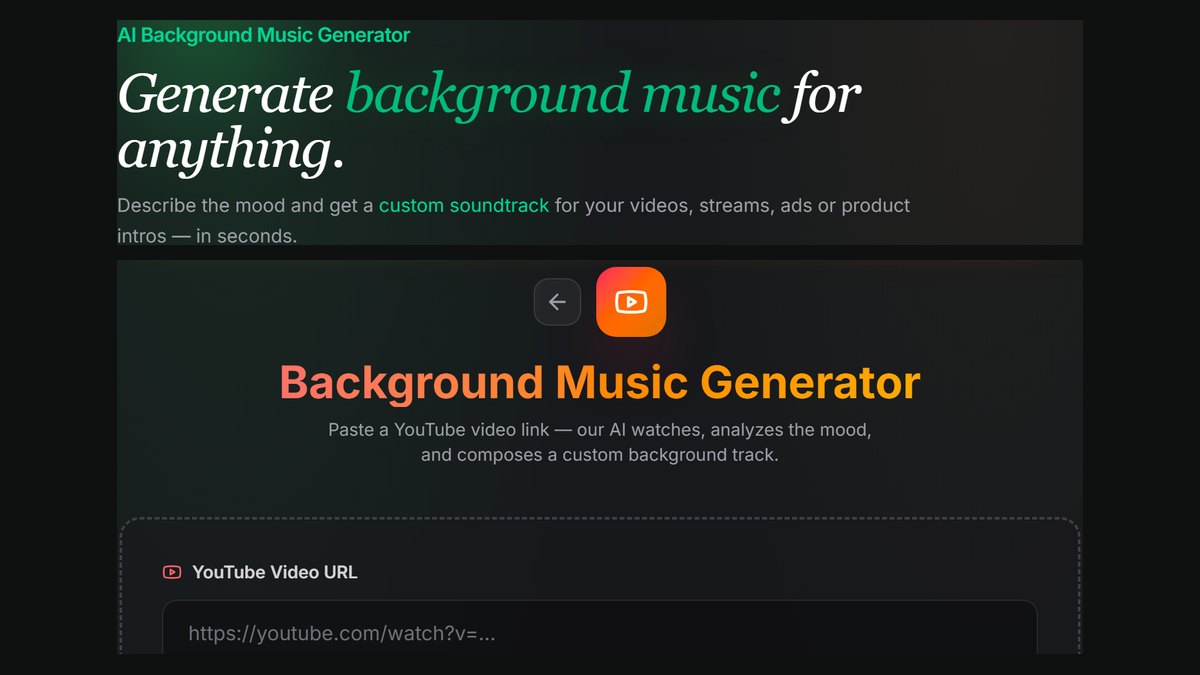
- Need music without singing for a video voice-over? Paste the video's YouTube link into the AI Background Music Generator: it watches the video, reads its mood and composes a background track to fit.
The advantage is speed: you can hear ten versions of your idea in the time it takes to book one studio session, and each version uses one song from your plan instead of another studio fee. Listen carefully to how the brand name is pronounced; if it's wrong, try spelling it the way it sounds.
Step 6: Cut the versions you'll actually use
A single jingle file isn't enough. Cut it into the formats you need:
- Sonic logo, 3–5 seconds: the hook or the name with its notes, for the end of every video and ad.
- 15 seconds: social video, pre-roll ads.
- 30 seconds: the standard length for radio and TV spots.
- 60 seconds: longer radio spots, events, the full version for your website.
- Instrumental: the same music without vocals, for voice-overs.
The free Audio Cutter trims any song to an exact length and fades the ends in your browser. Make each cut end on the brand name or on the final chord, never in the middle of a phrase.
Before you send files to a radio station or an ad platform, check their loudness and format requirements. The LUFS Loudness Meter shows how loud your jingle is.
Step 7: Make sure you have the rights
This step protects your business. Before you use any music in an ad, you need the right to use it commercially, in the places you'll use it (radio, TV, online ads, social media), for as long as you need.
- A musician or studio: get a written agreement that says you own the jingle or have a license for all the uses you need, with no time limit if possible.
- Stock or library music: read the license; many standard licenses exclude broadcast TV and radio, or charge more for them.
- AI-generated music: check the generator's terms. On SongUp AI, songs made on a paid plan come with a commercial license and a certificate you can show if a platform asks. Read the details on the terms page before you use a song in a paid ad.
- Famous songs: using or rewording a well-known song needs permission from both the songwriter's publisher and the label that owns the recording, which is expensive and often refused. Write something original.
You may also want to register your slogan or sonic logo as a trademark once it becomes part of your brand. That's a question for a trademark lawyer in your country.
Where to use your jingle
- Radio and podcast ads: the 30 and 60 second versions.
- Social video: Reels, Shorts and TikTok with the 15-second cut, and the sonic logo at the end of every video.
- YouTube pre-roll: the 15-second cut, with your name in the first 5 seconds, before viewers can skip.
- Phone hold music and voicemail: the instrumental, with the sonic logo.
- In store and at events: the full version, sparingly, so it doesn't wear thin.
- Your website and app: the sonic logo on a welcome video or a notification.
Consistency is what makes a jingle work. Use the same notes and the same name every time, everywhere, for months. People only start remembering it after they've heard it many times.
Frequently asked questions
How long should a jingle be?
Make several lengths: a 3–5 second sonic logo, plus 15, 30 and 60 second versions. Radio and TV usually use 30 seconds; social video and pre-roll ads use 15 seconds or less.
How much does a jingle cost?
From almost nothing if you make it yourself, to a few hundred dollars for a freelancer, to many thousands for an agency with broadcast rights. AI tools cost the price of a subscription and let you try many versions.
Can I make a jingle with AI?
Yes. Write a short hook with your brand name, describe the style, and an AI song generator such as SongUp AI produces a finished, sung version in minutes. Check that the plan you use includes a commercial license.
Can I use a popular song in my ad?
Only with permission from both the publisher (for the song) and the label (for the recording), which is expensive and often refused. An original jingle avoids the problem and becomes yours alone.
What makes a jingle catchy?
Repetition, a small melodic range, a simple rhythm that follows the words, and the brand name on the strongest beat at the end. The fewer words, the better.
Do I need a singer for a jingle?
Not always. A sonic logo can be played by an instrument, and many ads use instrumental beds under a voice-over. But a sung tagline with your name is the strongest way to be remembered.
Make your jingle today
Write down your brand name and one promise. Turn it into a 6-word hook, choose the feel, and hear it as a finished song on SongUp AI. Cut a sonic logo and a 15-second version, and you'll have brand audio for every ad and video you make this year.